
We Taught AI to Publish to Social Media, But Not Without Your Approval
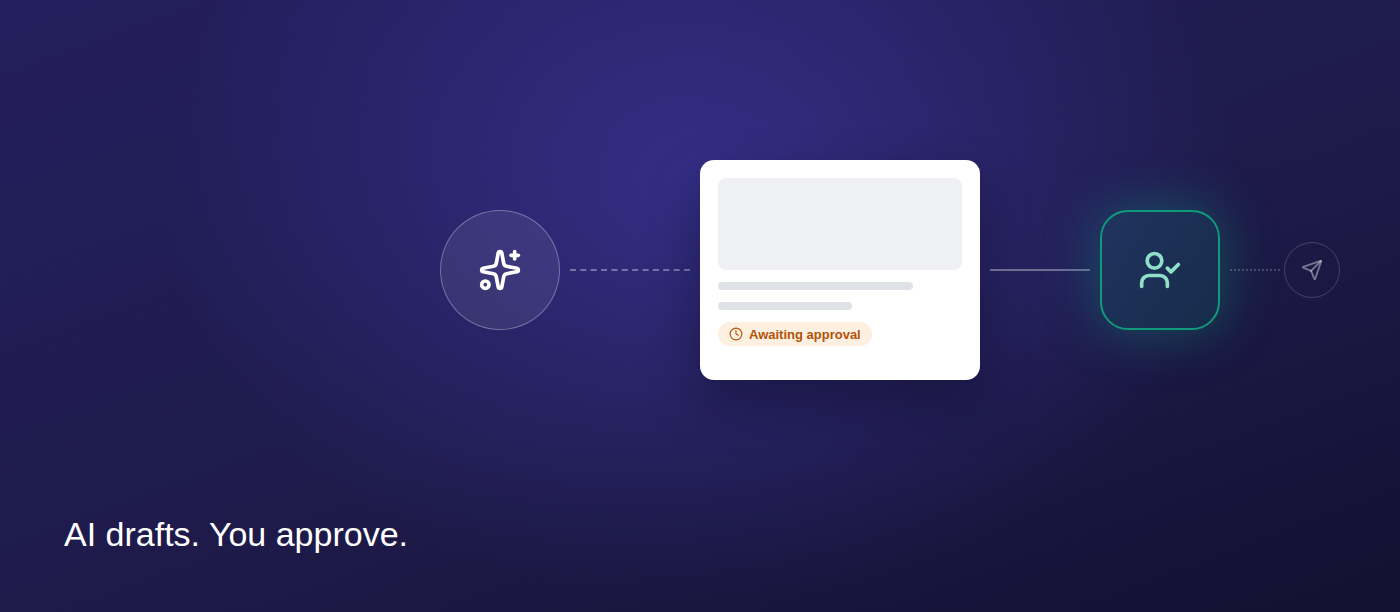
An AI agent that can write a caption is useful. An AI agent that can publish it to a client’s Instagram, TikTok or LinkedIn on its own is a liability waiting for a bad day. We built Flomixy’s AI integration around that difference: ChatGPT, Claude or your own agent can draft, propose a time and queue posts, but it cannot get anything in front of an audience without a human saying yes.
The problem with giving an agent your social accounts
The obvious way to connect an AI assistant to social media is to hand it a token and a “publish” tool. It works in the demo. Then the agent reads a web page or a comment with a hidden instruction in it, or simply misjudges a brief, and a post goes live under a real brand’s name. Deleting it doesn’t un-send the notification.
Most safety advice for agents lives in the prompt: “never publish without asking.” That’s a request, not a guarantee. A prompt can be ignored, overridden or injected around. For something as public as a brand’s feed, we wanted the guarantee to live somewhere the agent can’t reach.
What an agent can do in Flomixy
Flomixy exposes its post API to AI clients through an MCP server. ChatGPT and Claude connect with a normal Flomixy login: you add Flomixy as an app or connector, approve access on a consent screen and pick the workspace, with no API key to copy. Agent frameworks and automations can use a workspace API key instead (see the setup guide). Either way, the assistant can:
- Create drafts and posts one network at a time or several in one call. Instagram and Telegram are live, LinkedIn publishes to your personal profile, TikTok is in TikTok’s Content Posting review (posts stay visible only to the account owner until it clears), and Threads and Facebook are rolling out
- Propose a publish time, or ask for the next free slot
- Look up connected accounts, brands, hashtag sets and each network’s limits before writing, so a caption isn’t rejected later
- Edit a caption or media on a post that hasn’t gone out yet
- Read performance data and see which posts are waiting for approval, and read the reviewer’s change requests
That’s a real workflow: a brief goes in, a week of platform-specific drafts comes out, already sitting in the review queue. Want to try it? Here is the step-by-step guide to scheduling posts from ChatGPT or Claude.
What it cannot do
Every post an agent creates is held for human approval by default, and that rule is enforced on our server, not in the agent’s instructions. Without an explicit approval setting, the post waits for a person before anything is published. There is also no tool for approving or rejecting a post. The agent can read the status of an approval and the reviewer’s notes, but the decision button doesn’t exist on its side of the API.
A few consequences worth spelling out:
- A time the agent picks is a proposal. The post still waits for sign-off before it can go out at that time.
- The agent can name who should review a post, from the people in the workspace who are allowed to approve, or send an external reviewer a review link.
- A brand set to always require owner approval keeps requiring it, whatever the agent asks for.
- If a reviewer asks for changes, the agent can read the note and revise the draft, but the revised post goes back into the queue.
The one escape hatch, and why it’s locked
Some teams do want unattended publishing, for example a trusted internal feed with low stakes. Flomixy allows it, but only through a separate permission that the workspace owner has to grant to a specific API key. Without it, an agent asking to skip review gets refused and nothing is created. With it, every skipped review is recorded against the key that did it.
We’d also be honest about the trade-off. An agent that reads untrusted content (web pages, emails, comments) and holds that permission can be tricked into publishing without a human check. Our advice is to grant it only to keys that never process untrusted input, and to leave it off for anything client-facing.
Why this matters for agencies
If you manage social media for clients, the question isn’t whether AI can write posts. It’s who is accountable when one goes out wrong. Keeping a human approval step between the agent and the audience means the agency, and the client where they have a say, still decides what carries their name. It’s the same principle behind a good client approval workflow, applied to a new kind of contributor: whoever (or whatever) writes the draft, a named person signs off.
It also removes the cost of the failure mode we wrote about in the real cost of a missed approval deadline. When agents fill the queue quickly, the bottleneck moves to review, so a visible, tracked approval queue matters more, not less.
The design rule behind it
When a tool is used by something that acts on its own, put the safety invariant below the layer the agent controls. Instructions and prompts are advice. A server that refuses to publish an unapproved post is a guarantee. That’s the rule we followed, and it’s why you can let an agent do the tedious 90% of social media work without giving it the last 10%.
